 Business License

NBR vs FKM Rubber Seals: Material Selection Guide | Sealchris
NBR vs FKM Rubber Seals: Key Differences and Engineering Selection Guide
In industrial sealing architecture, specifying the correct elastomer is a critical engineering decision that directly governs system pressure containment, fluid purity, and equipment Mean Time Between Failures (MTBF).
Among the highest volume polymers used in modern fluid power and fluid handling systems, NBR (Nitrile Butadiene Rubber) and FKM (Fluorocarbon Rubber, often referred to as Viton™) serve as the backbone for critical sealing applications.
While both elastomers are heavily utilized for O-rings, dynamic gaskets, and custom molded components, they feature radically divergent chemical backbones. Mistaking NBR for FKM—or over-specifying a system with FKM unnecessarily—can result in catastrophic compound degradation, environmental leaks, or inflated Total Cost of Ownership (TCO).
This technical guide provides a data-driven comparison to help engineering and procurement teams choose the optimal sealing compound.
1. NBR Rubber Seals (Nitrile Butadiene Rubber)
NBR is a synthetic copolymer of acrylonitrile (ACN) and butadiene. It is the workhorse of the fluid power industry, valued for its mechanical toughness and excellent resistance to petroleum-based fluids.
Key Engineering Properties
· Petroleum Fluid Mastery: Outstanding resistance to mineral-based hydraulic oils, greases, vegetable oils, and petroleum fuels.
· Mechanical Resilience: High tensile strength, superior abrasion resistance, and excellent tear endurance, ideal for dynamic reciprocating seals.
· Thermal Operating Envelope: -40°C to +120°C (-40°F to +248°F).
· ACN Tuning Flexibility: Higher ACN content increases oil resistance but raises the low-temperature brittleness point.
· High Cost-Efficiency: Economical price-to-performance ratio for high-volume manufacturing.
Critical Compound Limitations
· Environmental Vulnerability: Poor resistance to ozone, UV radiation, and weathering; prone to micro-cracking.
· Chemical Incompatibility: Degrades with polar solvents, glycol-ether brake fluids, and strong acids.
Primary Industrial Deployments
· Hydraulic cylinders, pneumatic pumps, fluid power systems
· Automotive fuel lines, oil pans, and general powertrain sealing
· Agricultural machinery, heavy-duty construction equipment, industrial gearboxes
· General-purpose commercial O-rings and static pipe gaskets
2. FKM Rubber Seals (Fluorocarbon Rubber / Viton™)
FKM is a high-performance synthetic rubber containing fluorine atoms, granting unprecedented thermal stability and near-universal chemical inertia.
Key Engineering Properties
· Extreme Thermal Thresholds: Continuous use up to +250°C (+482°F); short-term spikes up to +300°C.
· Universal Chemical Resistance: Resistant to hydrocarbons, synthetic hydraulic fluids, aromatic solvents, crude oil, and strong acids.
· Low Compression Set: Maintains tight volumetric seal under constant thermal and mechanical stress.
· Ozone and Vacuum Stability: Resistant to UV, ozone, and outgassing in high-vacuum environments.
Critical Compound Limitations
· Low-Temperature Rigidity: Standard FKM grades limited to -20°C (-4°F), specialized grades down to -40°C.
· Premium Cost Profile: Higher raw material cost than standard NBR.
Primary Industrial Deployments
· Downhole drilling tools, refinery manifolds, midstream oil & gas pipelines
· Chemical processing reactors, blending tanks, aggressive solvent piping
· Aerospace fuel systems, jet engine seals, high-performance automotive modules
· High-vacuum semiconductor processing chambers
3. Technical Performance Comparison Matrix
Performance Property | NBR (Nitrile) Compound | FKM (Fluorocarbon / Viton™) | Engineering Selection |
Continuous Temperature | -40°C to +120°C | -20°C to +250°C | FKM for high heat; NBR for extreme low-temperature fluid power. |
Petroleum & Fuel Resistance | Excellent (Standard Grades) | Outstanding (Premium Grades) | Both perform well; FKM handles sour crude/aromatic fuels better. |
Chemical & Acid Resistance | Poor to Fair | Excellent (Broad spectrum) | FKM for aggressive chemical processing. |
Abrasion & Tear Strength | High | Moderate | NBR for high-friction, dynamic motion. |
Ozone & UV Resistance | Poor | Outstanding | FKM for exposed/outdoor applications. |
Compression Set Resistance | Moderate | Excellent | FKM for low-maintenance long-life seals. |
Relative Component Cost | Low / Commercial Baseline | Higher Premium | NBR for cost optimization. |
4. Strategic Selection Logic: NBR vs. FKM
Specify NBR if:
· System uses mineral oils, water-glycol hydraulic fluids, or general lubricants under +120°C
· High dynamic motion, heavy friction, or abrasive wear occurs
· Ambient environment avoids sunlight, ozone, or weather exposure
· Cost-efficiency and production margins are critical
Specify FKM if:
· Temperatures exceed +120°C or involve intense thermal cycling
· Medium contains sour gas, bio-fuels, aromatic hydrocarbons, or harsh chemicals
· Downtime costs are high; low-maintenance, long-life seal required
· High-vacuum environments or stringent regulatory compliance
5. System Optimization: The Hybrid Engineering Approach
Industrial Hydraulic Power Units (HPUs)
· Sealchris NBR seals for low-pressure reservoirs, piping couplers, dynamic cylinder rods
· Sealchris FKM seals for hot pump discharges, pressure relief valves, accumulator interfaces
6. Advanced Elastomer Manufacturing Capabilities by XI’AN CHRIS NEW MATERIALS CO., LTD. (Sealchris)
· ISO 9001:2015 certified industrial elastomer manufacturer
· Custom O-rings and molded profiles per AS568, ISO 3601, DIN 3771
· Heavy-duty hydraulic seals: V-rings, U-cups, wipers, piston rings
· Material verification: compression set, tensile strength, fluid compatibility
Partner with Sealchris for Secure Fluid Containment
For heavy machinery, chemical refineries, or high-performance fluid power systems, Sealchris provides precise technical data and manufacturing consistency. Contact the engineering team for technical drawings, compound datasheets, or production quotes.
Recently Posted
-
New Open Mill Arrived | SEAL CHRIS Production Upgrade
August 4, 2026Great news from SEAL CHRIS! Our brand-new rubber open mill has officially landed at our factory.As a core equipment for rubber mix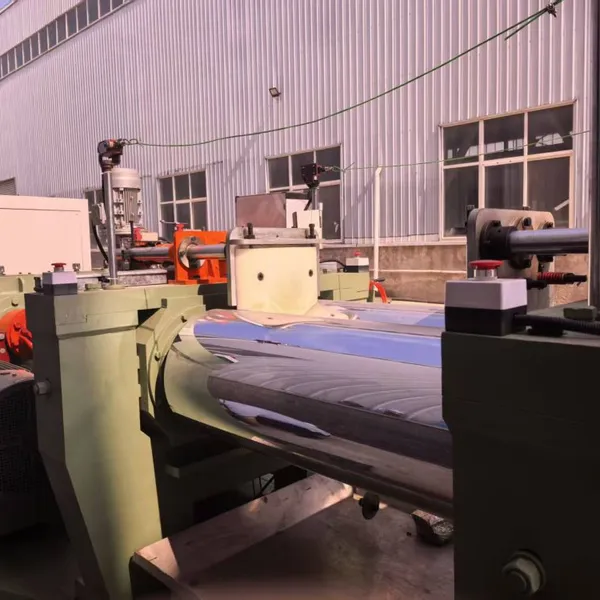 Read More
 -
High-Temperature FFKM Sealing Rings | Oil & Gas Extreme Environment Applications
July 21, 2026High-Temperature FFKM Sealing Rings for Oil & Gas ApplicationsProduct OverviewFFKM sealing rings are engineered for extreme op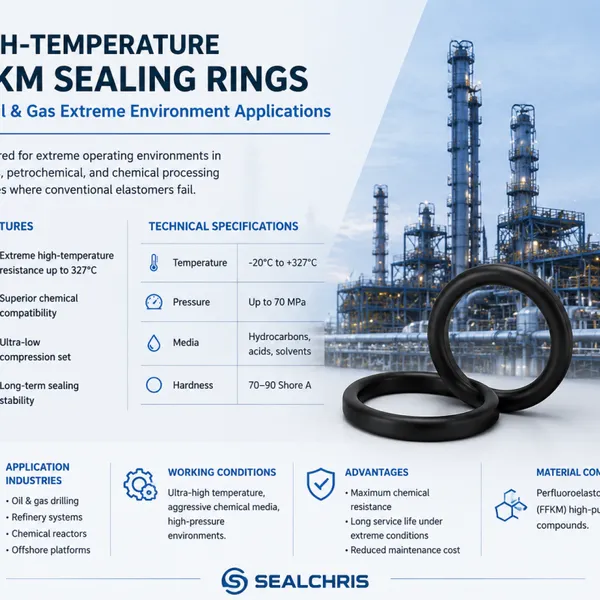 Read More
 -
Automotive Rubber Seal Applications: Engine, Fuel System & Vehicle Sealing Solutions
July 14, 2026Automotive Rubber Seal Applications: Engine, Fuel System & Vehicle Sealing SolutionsAutomotive rubber seals are essential comp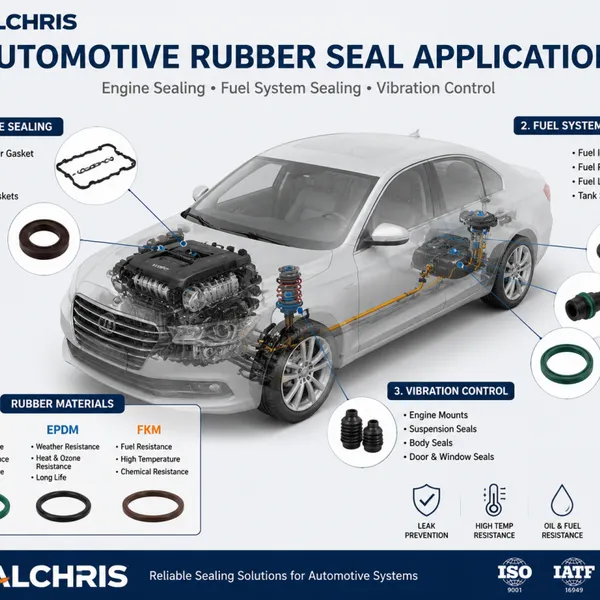 Read More
 -
Hydraulic Cylinder Seals | Piston and Rod Seal Guide
July 7, 2026Hydraulic Cylinder Seals | Piston and Rod Seal GuideIntroductionHydraulic cylinders are widely used in construction machinery, ind Read More

Contact Us
Recommended Products
-
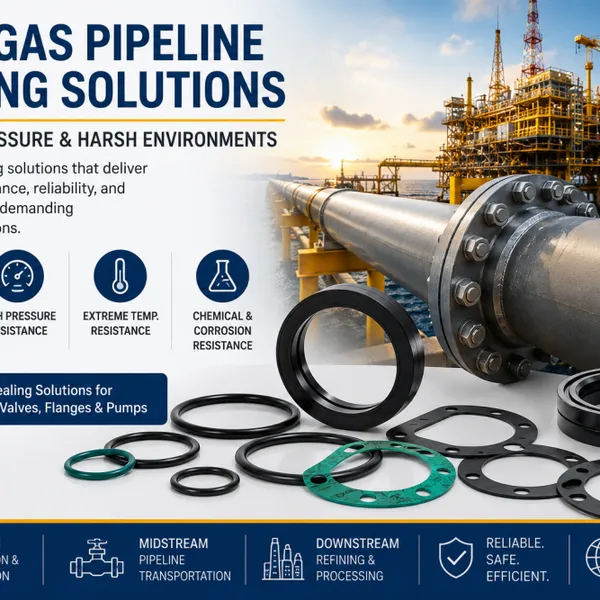
 Oil & Gas Pipeline Gaskets | High Pressure Sealing SystemsNegotiableMOQ: 10 Pieces
 -
Air Compressor High-Temperature Seals | Vibration Resistant DesignNegotiableMOQ: 10 Pieces
-
FFKM Chemical Processing Seals | Ultra Corrosive EnvironmentsNegotiableMOQ: 10 Pieces
-
High-Temperature Industrial O-Rings | Mechanical Equipment SealingNegotiableMOQ: 10 Pieces
-
Heavy Duty Hydraulic Gaskets | Mining & Construction EquipmentNegotiableMOQ: 10 Pieces
-
FFKM Valve O-Rings | High-Temperature Petrochemical ApplicationsNegotiableMOQ: 10 Pieces
-
Chemical Resistant Industrial Gaskets | Acid Alkali Processing EquipmentNegotiableMOQ: 10 Pieces
-
High-Pressure Compressor Sealing Gaskets | Gas Compression SystemsNegotiableMOQ: 10 Pieces
-
FKM High-Temperature O-Rings | Industrial Fluid Sealing SystemsNegotiableMOQ: 10 Pieces
-
Oil Drilling High-Temperature Sealing Rings | Extreme Downhole ConditionsNegotiableMOQ: 10 Pieces
-
Chemical Reactor Gaskets | High-Temperature Corrosion ResistanceNegotiableMOQ: 10 Pieces
-
Industrial Air Compressor Gaskets | High Vibration SystemsNegotiableMOQ: 10 Pieces
-
FFKM Chemical Resistant O-Rings | Aggressive Media SealingNegotiableMOQ: 10 Pieces
-
High-Pressure Hydraulic Sealing Rings | Heavy Industrial EquipmentNegotiableMOQ: 10 Pieces
-
Specialty Rubber O-Rings | High-Pressure Oil & Gas ApplicationsNegotiableMOQ: 10 Pieces

-
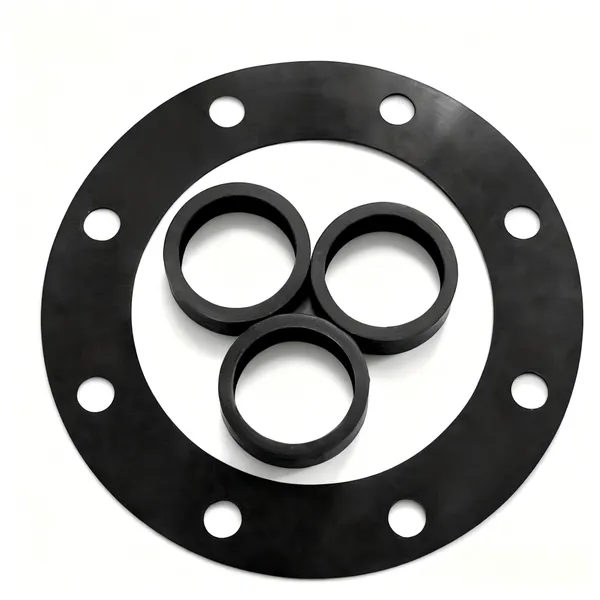
High-Temperature Rubber Seals | Steam & Hot Fluid SystemsNegotiableMOQ: 10 Pieces
-
FKM Sealing Rings | Corrosive Chemical HandlingNegotiableMOQ: 10 Pieces
-
Wear-Resistant Rubber Gaskets | High-Pressure Hydraulic SystemsNegotiableMOQ: 10 Pieces
-
High-Temperature FFKM O-Rings | Chemical Reactor SealingNegotiableMOQ: 10 Pieces
-
Industrial Air Compressor Sealing Rings | High-Temperature Vibration SystemsNegotiableMOQ: 10 Pieces