 Business License

EPDM vs Silicone Rubber Seals: Key Differences and Engineering Selection Guide
EPDM vs Silicone Rubber Seals: Key Differences and Engineering Selection Guide
In industrial sealing engineering, specifying the correct elastomer is paramount to safeguarding system pressure integrity, preventing volatile emissions, and maximizing equipment Mean Time Between Failures (MTBF).
Among high-volume industrial elastomers, EPDM (Ethylene Propylene Diene Monomer) and Silicone Rubber (VMQ) represent two of the most widely deployed yet fundamentally distinct material choices.
While both polymers exhibit excellent environmental resilience, they diverge sharply when subjected to localized mechanical stresses, thermal extremes, and aggressive chemical reagents. Misspecifying these materials often precipitates catastrophic cross-contamination, rapid compound swelling, or premature seal extrusion.
This engineering guide provides a rigorous comparative analysis to streamline material procurement for demanding piping, automotive, and processing applications.
1. EPDM Rubber (Ethylene Propylene Diene Monomer)
EPDM is a highly versatile synthetic elastomer synthesized via copolymerization, widely celebrated for its robust cross-linking structure and exceptional resilience in polar fluid environments.
Key Engineering Properties
Exceptional Polar Medium Resistance
Outstanding performance when exposed to hot water, low-pressure steam, dilute acids, and alkaline solutions.
Environmental & Ozone Longevity
Highly stable backbone resistant to UV radiation, atmospheric ozone cracking, and weathering.
Thermal Operating Envelopes
Reliably maintains elastic properties across a temperature spectrum of -40°C to +150°C (-40°F to +302°F).
High Tensile Strength
Superior mechanical tear and abrasion resistance compared to soft silicone compounds, making it ideal for dynamic sealing faces.
Cost Efficiency
Offers a highly economical total cost per unit, optimizing high-volume production budgets.
Critical Compound Limitations
Nonpolar Fluid Vulnerability
Suffers severe volumetric swelling and structural degradation when exposed to nonpolar solvents, petroleum-based oils, fuels, lubricants, and hydrocarbons.
Primary Industrial Deployments
Municipal and industrial water treatment infrastructure.
Potable water distribution networks (compliant with global standards like WRAS, NSF/ANSI 61).
HVAC closed-loop systems and industrial boiler flange gaskets.
Automotive weatherstripping, brake system seals (compatible with glycol-based fluids), and outdoor electrical enclosures.
2. Silicone Rubber (VMQ / Vinyl Methyl Silicone)
Silicone rubber is an inorganic polymer featuring a highly stable silicon-oxygen (Si-O-Si) backbone, granting it unparalleled thermal stability and biocompatibility.
Key Engineering Properties
Extended Thermal Thresholds
Exceptional stability across an extreme temperature range from -60°C to +200°C (-76°F to +392°F), with specialized formulations enduring up to +250°C.
Low Compression Set
Retains high sealing force and elastic recovery over extended periods under high-temperature loads.
Biocompatibility & Purity
Inherently non-toxic, odorless, and chemically inert, making it fully compliant with stringent sanitary regulations.
Superior Dielectric Performance
Acts as an excellent electrical insulator with high dielectric strength for electronic shielding.
Critical Compound Limitations
Inferior Mechanical Metrics
Possesses significantly lower tensile strength, tear resistance, and abrasion endurance than EPDM. Not recommended for high-pressure dynamic sealing or abrasive slurries.
Hydrocarbon & Steam Sensitivity
Degrades quickly in the presence of concentrated fuels, acids, and superheated process steam.
Primary Industrial Deployments
Food processing, dairy, and beverage production lines (requiring FDA 21 CFR 177.2600 and 3-A Sanitary compliance).
Pharmaceutical and medical device sealing geometries.
High-temperature automotive wire harnesses, powertrain electronics, and aerospace interior seals.
Industrial oven door seals, laboratory instrumentation gaskets, and electronic insulation components.
3. Technical Performance Comparison Matrix
The table below outlines the core engineering parameters required to finalize material selection matrices:
Performance Property | EPDM Compound | Silicone Rubber (VMQ) | Engineering Selection Recommendation |
Continuous Temperature Range | -40°C to +150°C | -60°C to +200°C | Silicone for cryogenic or extreme thermal environments. |
Hot Water & Steam Resistance | Excellent (Up to 150°C) | Fair to Poor (Hydrolyzes at high temp) | EPDM for steam loops and boiler feed water. |
Tensile & Tear Strength | High (Robust mechanical profile) | Low to Moderate (Prone to tearing) | EPDM for high-pressure dynamic seals. |
Petroleum Oils & Fuel Resistance | Poor (Avoid entirely) | Fair to Poor (Swells in aromatic fuels) | Use FKM (Viton) or Nitrile (NBR) instead. |
UV, Ozone & Weathering | Outstanding | Outstanding | Both are highly suitable for long-term outdoor deployment. |
Regulatory & Food Safety | Available in specific water grades | Inherently Food/Medical Grade | Silicone for direct sanitary and biological contact. |
Relative Material Cost | Low to Moderate (Economical) | Higher Premium | EPDM for commercial cost optimization. |
4. Strategic Selection Logic: EPDM vs. Silicone
Specify EPDM if your application profile matches:
The sealing media is predominantly water, treated wastewater, or low-pressure industrial steam.
The component requires high mechanical toughness, frequent cycling, or resistance to abrasive installation wear.
Cost-efficiency is critical for a large-scale project rollout.
Operating temperatures stay strictly within the -40°C to +150°C envelope.
Specify Silicone if your application profile matches:
Continuous operating temperatures routinely exceed +150°C or drop below -40°C.
The seal comes into direct contact with food, beverages, pharmaceutical ingredients, or human tissue.
The sealing assembly requires maximum material flexibility with low closing forces (e.g., delicate electronic housings).
High dielectric strength and electrical isolation are required alongside environmental sealing.
5. Industrial Co-Engineering Case Studies
In sophisticated mechanical design, engineers rarely rely on a single material across an entire system. Hybrid material integration optimizes both cost and performance:
Food & Beverage Bottling Plants
Engineers utilize Sealchris Silicone seals for the processing heads and filling nozzles where direct product contact occurs under strict FDA sanitary mandates.
Concurrently, Sealchris EPDM gaskets are placed in the plant's main utility water lines, heat exchangers, and CIP (Clean-In-Place) chemical delivery systems to maximize cost savings and structural durability.
Electric Vehicle (EV) Powertrains
Silicone seals isolate and protect sensitive high-voltage battery enclosures from external thermal spikes and moisture ingress, while EPDM profiles are utilized for the vehicle's glycol-coolant loop hoses and radiator couplings.
6. Advanced Elastomer Manufacturing Capabilities by XI’AN CHRIS NEW MATERIALS CO., LTD. (Sealchris)
As an ISO-certified industrial elastomer manufacturer, XI’AN CHRIS NEW MATERIALS CO., LTD. (Sealchris) delivers high-performance sealing solutions tailored to strict global engineering specifications.
Our vertically integrated production capabilities enable us to support your project from initial material selection to full-scale component supply:
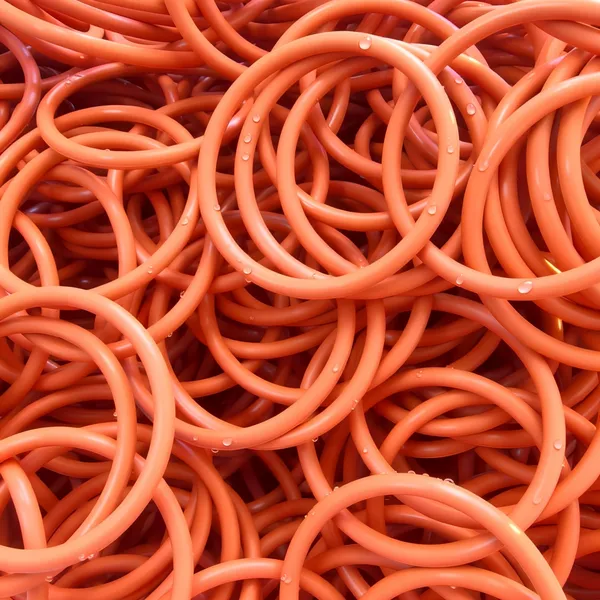
Precision O-Rings
Standard and custom dimension AS568, ISO 3601, and DIN 3771 O-rings in premium EPDM and Silicone compounds.
Custom Molded Rubber Parts
Die-cut or compression-molded profile seals developed precisely from client-furnished 2D/3D CAD drawings or physical product samples.
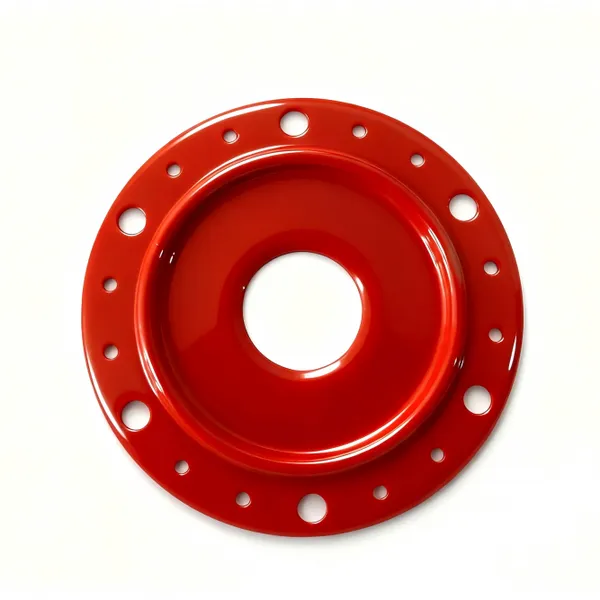
Industrial Flange Gaskets
Full-face and ring gaskets cut to ANSI B16.21, EN 1514-1, and custom layout geometries.
Certified Water & Sanitary Compounds
Formulations matching international drinking water (WRAS, NSF) and sanitary processing (FDA, 3-A) criteria.
Partner with Sealchris for Secure Fluid Containment
Whether you are developing next-generation water filtration skids, medical devices, or severe-service industrial machinery, our engineering division provides comprehensive material verification, finite element modeling input, and rapid prototyping services.
Contact Sealchris today to consult with a material engineer, request specific compound data sheets, or secure a volume production quote.
Recently Posted
-
New Open Mill Arrived | SEAL CHRIS Production Upgrade
August 4, 2026Great news from SEAL CHRIS! Our brand-new rubber open mill has officially landed at our factory.As a core equipment for rubber mix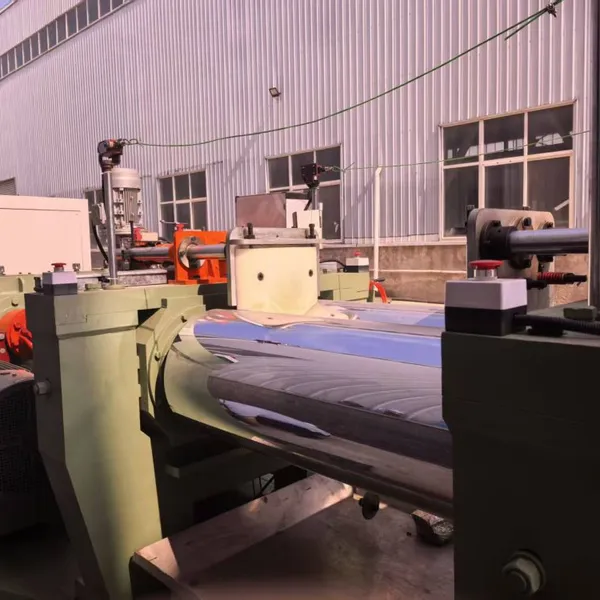 Read More
 -
High-Temperature FFKM Sealing Rings | Oil & Gas Extreme Environment Applications
July 21, 2026High-Temperature FFKM Sealing Rings for Oil & Gas ApplicationsProduct OverviewFFKM sealing rings are engineered for extreme op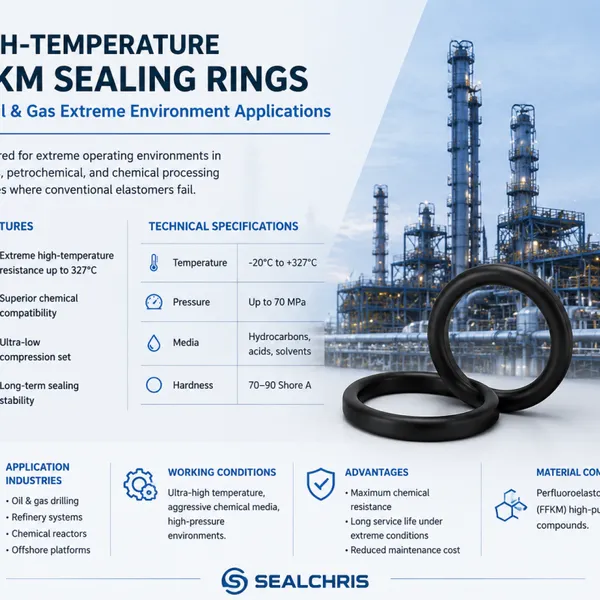 Read More
 -
Automotive Rubber Seal Applications: Engine, Fuel System & Vehicle Sealing Solutions
July 14, 2026Automotive Rubber Seal Applications: Engine, Fuel System & Vehicle Sealing SolutionsAutomotive rubber seals are essential comp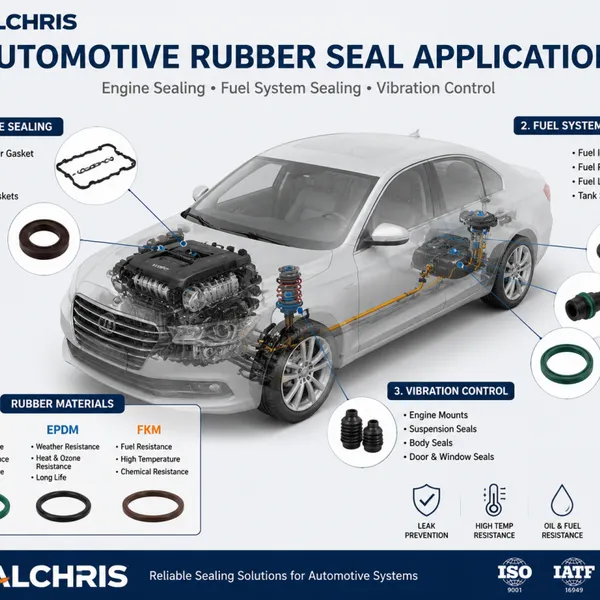 Read More
 -
Hydraulic Cylinder Seals | Piston and Rod Seal Guide
July 7, 2026Hydraulic Cylinder Seals | Piston and Rod Seal GuideIntroductionHydraulic cylinders are widely used in construction machinery, ind Read More

Contact Us
Recommended Products
-
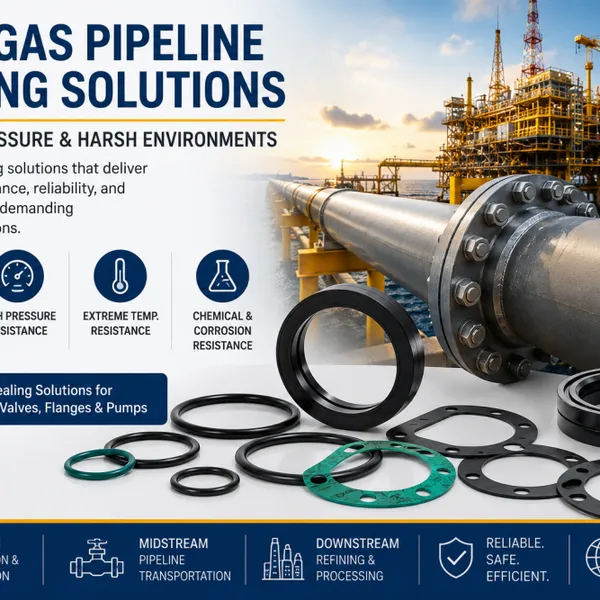
 Oil & Gas Pipeline Gaskets | High Pressure Sealing SystemsNegotiableMOQ: 10 Pieces
 -
Air Compressor High-Temperature Seals | Vibration Resistant DesignNegotiableMOQ: 10 Pieces
-
FFKM Chemical Processing Seals | Ultra Corrosive EnvironmentsNegotiableMOQ: 10 Pieces
-
High-Temperature Industrial O-Rings | Mechanical Equipment SealingNegotiableMOQ: 10 Pieces
-
Heavy Duty Hydraulic Gaskets | Mining & Construction EquipmentNegotiableMOQ: 10 Pieces
-
FFKM Valve O-Rings | High-Temperature Petrochemical ApplicationsNegotiableMOQ: 10 Pieces
-
Chemical Resistant Industrial Gaskets | Acid Alkali Processing EquipmentNegotiableMOQ: 10 Pieces
-
High-Pressure Compressor Sealing Gaskets | Gas Compression SystemsNegotiableMOQ: 10 Pieces
-
FKM High-Temperature O-Rings | Industrial Fluid Sealing SystemsNegotiableMOQ: 10 Pieces
-
Oil Drilling High-Temperature Sealing Rings | Extreme Downhole ConditionsNegotiableMOQ: 10 Pieces
-
Chemical Reactor Gaskets | High-Temperature Corrosion ResistanceNegotiableMOQ: 10 Pieces
-
Industrial Air Compressor Gaskets | High Vibration SystemsNegotiableMOQ: 10 Pieces
-
FFKM Chemical Resistant O-Rings | Aggressive Media SealingNegotiableMOQ: 10 Pieces
-
High-Pressure Hydraulic Sealing Rings | Heavy Industrial EquipmentNegotiableMOQ: 10 Pieces
-
Specialty Rubber O-Rings | High-Pressure Oil & Gas ApplicationsNegotiableMOQ: 10 Pieces

-
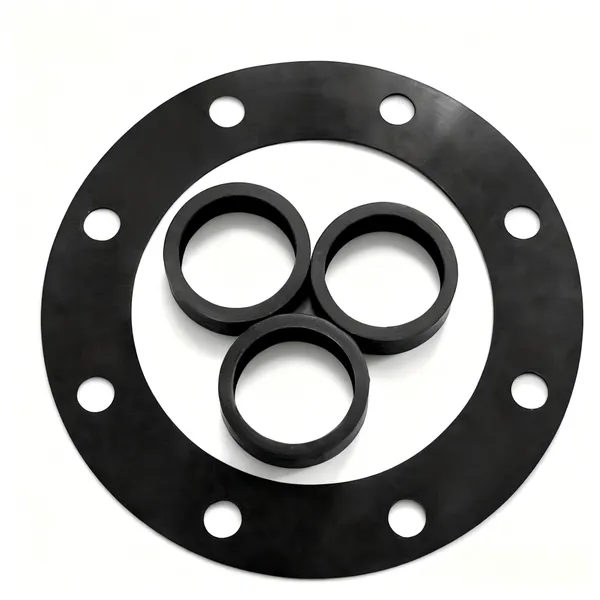
High-Temperature Rubber Seals | Steam & Hot Fluid SystemsNegotiableMOQ: 10 Pieces
-
FKM Sealing Rings | Corrosive Chemical HandlingNegotiableMOQ: 10 Pieces
-
Wear-Resistant Rubber Gaskets | High-Pressure Hydraulic SystemsNegotiableMOQ: 10 Pieces
-
High-Temperature FFKM O-Rings | Chemical Reactor SealingNegotiableMOQ: 10 Pieces
-
Industrial Air Compressor Sealing Rings | High-Temperature Vibration SystemsNegotiableMOQ: 10 Pieces