 Business License

How to Choose Rubber Seal Material | Complete Industrial Selection Guide
How to Choose Rubber Seal Material for Industrial Applications
Introduction
In industrial sealing systems, selecting the correct rubber material is one of the most important engineering decisions. A wrong material choice can lead to leakage, deformation, chemical corrosion, or system failure.
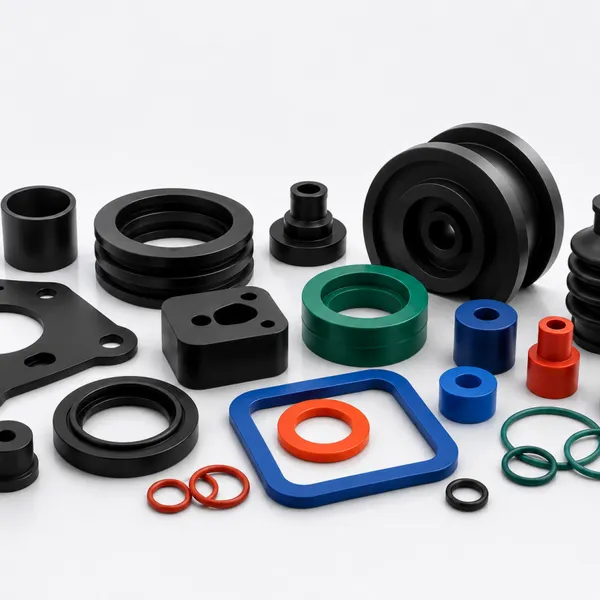
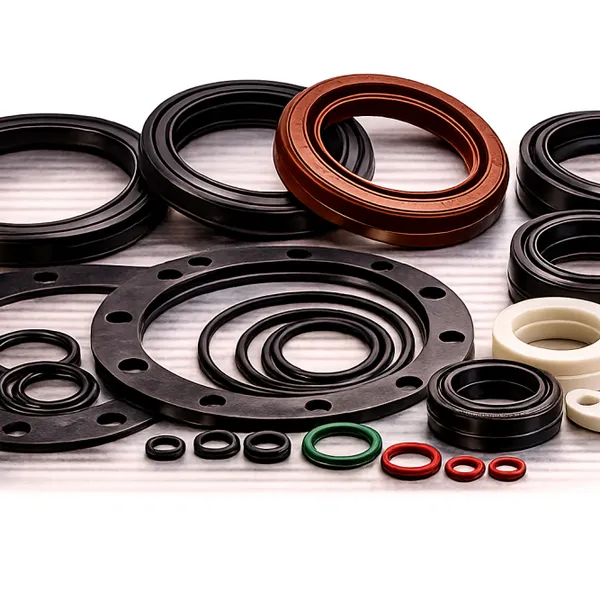
Rubber seals such as O rings, gaskets, hydraulic seals, and custom molded parts must operate under different conditions including temperature variation, pressure load, oil exposure, and chemical contact.
This guide explains how to select the correct rubber sealing material step by step, based on real industrial engineering standards.
1. Key Factors in Rubber Seal Material Selection
When choosing a rubber seal material, engineers must evaluate the following operating conditions:
▪ Temperature range of the system
▪ Type of media (oil, water, gas, chemicals)
▪ Pressure level (low, medium, high)
▪ Dynamic or static sealing condition
▪ Required service life
▪ Cost limitations
Each factor directly affects sealing performance and durability.
2. Temperature Resistance Requirement
Temperature is one of the most critical selection criteria.
▪ Low temperature applications require flexibility at cold conditions
▪ High temperature applications require thermal stability
Material comparison:
— NBR: -40°C to +120°C
— EPDM: -40°C to +150°C
— Silicone: -60°C to +200°C
— FKM: -20°C to +250°C
If temperature exceeds 150°C, FKM or silicone is usually required.
3. Media Compatibility (Oil, Water, Chemical)
Different rubber materials react differently to fluids.
▪ Oil-based systems require oil-resistant materials
▪ Water systems require hydrolysis resistance
▪ Chemical systems require corrosion resistance
Material behavior:
— NBR: Good oil resistance, weak chemical resistance
— EPDM: Excellent water resistance, poor oil resistance
— FKM: Excellent oil + chemical resistance
— FFKM: Extreme chemical resistance
Incorrect media selection is the most common cause of seal failure.
4. Pressure and Mechanical Load
Seals in hydraulic and industrial systems must withstand pressure deformation.
▪ High-pressure systems require strong compression resistance
▪ Dynamic systems require wear resistance
▪ Static systems require long-term stability
Material ranking for mechanical strength:
— HNBR (high strength)
— FKM (stable performance)
— NBR (standard systems)
— EPDM (moderate strength)
5. Cost vs Performance Balance
Material selection must also consider cost efficiency.
▪ NBR is the most economical solution
▪ EPDM offers good performance at low cost
▪ FKM provides premium performance at higher cost
▪ FFKM is used only in extreme applications
Engineering design often uses a hybrid approach to balance cost and performance.
6. Application-Based Material Selection
Oil & Gas Industry
Recommended materials:
— FKM rubber seals
— HNBR seals
— FFKM critical seals
Hydraulic Systems
Recommended materials:
— NBR seals
— HNBR seals
— PU seals for dynamic applications
Water Treatment Systems
Recommended materials:
— EPDM seals
— Silicone seals for temperature variation
Chemical Processing
Recommended materials:
— FKM seals
— FFKM seals
— PTFE composite seals
Automotive Systems
Recommended materials:
— NBR seals for fuel systems
— EPDM seals for cooling systems
— FKM seals for engines
7. Common Engineering Mistakes
Many seal failures are caused by incorrect material selection:
▪ Using EPDM in oil systems (causes swelling)
▪ Using NBR in high temperature systems (causes hardening)
▪ Using silicone in high pressure dynamic systems (causes wear)
▪ Ignoring chemical compatibility
Proper material selection significantly increases system lifespan.
8. Sealchris Material Engineering Capability
As a professional sealing manufacturer, Sealchris provides full material engineering support for industrial applications.
We supply:
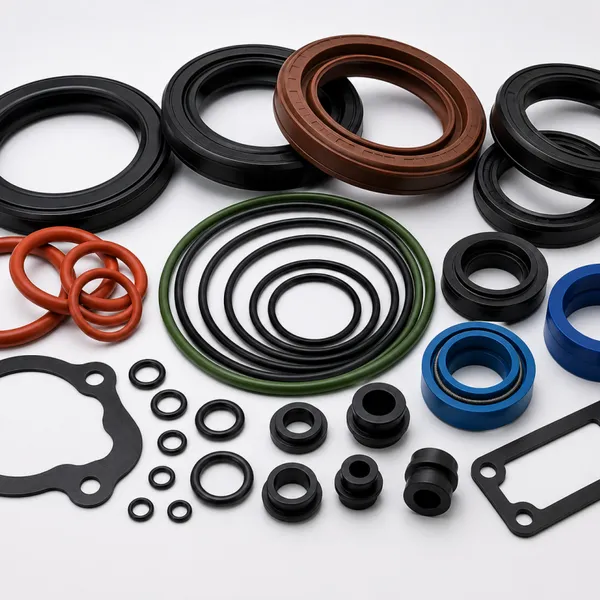
— O rings in NBR, FKM, EPDM, Silicone, HNBR
— Rubber gaskets for pipeline systems
— Hydraulic seals and oil seals
— Custom molded rubber components
— Industrial seal kits
We also support OEM customization based on drawings, samples, and working conditions.
Conclusion
Choosing the correct rubber seal material requires a clear understanding of temperature, pressure, and media conditions. NBR, EPDM, FKM, and other elastomers each have specific strengths and limitations.
Proper material selection ensures system reliability, reduces maintenance cost, and extends equipment service life.
Recently Posted
-
New Open Mill Arrived | SEAL CHRIS Production Upgrade
August 4, 2026Great news from SEAL CHRIS! Our brand-new rubber open mill has officially landed at our factory.As a core equipment for rubber mix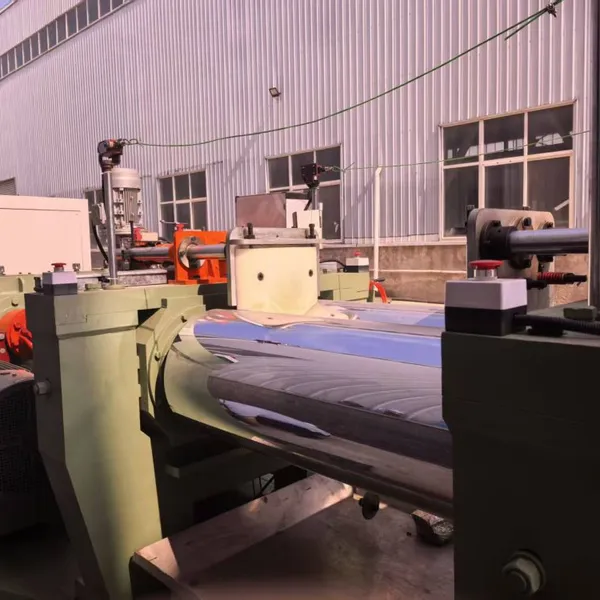 Read More
 -
High-Temperature FFKM Sealing Rings | Oil & Gas Extreme Environment Applications
July 21, 2026High-Temperature FFKM Sealing Rings for Oil & Gas ApplicationsProduct OverviewFFKM sealing rings are engineered for extreme op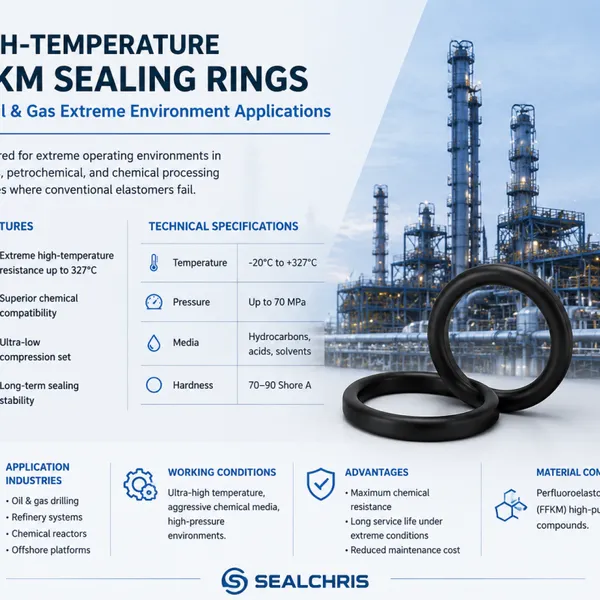 Read More
 -
Automotive Rubber Seal Applications: Engine, Fuel System & Vehicle Sealing Solutions
July 14, 2026Automotive Rubber Seal Applications: Engine, Fuel System & Vehicle Sealing SolutionsAutomotive rubber seals are essential comp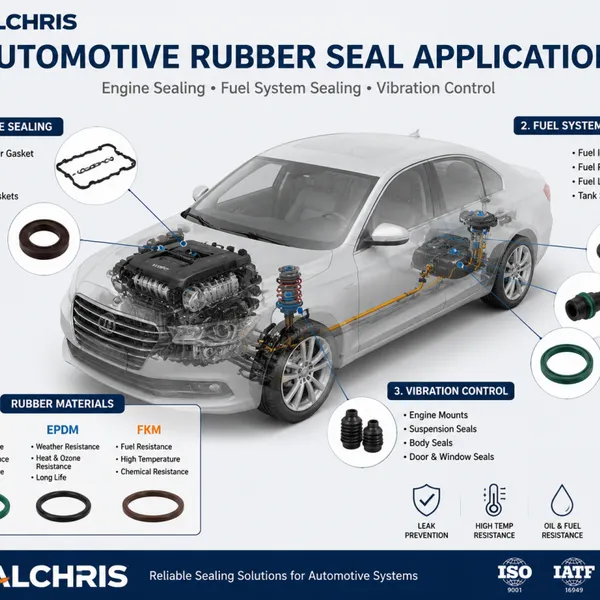 Read More
 -
Hydraulic Cylinder Seals | Piston and Rod Seal Guide
July 7, 2026Hydraulic Cylinder Seals | Piston and Rod Seal GuideIntroductionHydraulic cylinders are widely used in construction machinery, ind Read More

Contact Us
Recommended Products
-
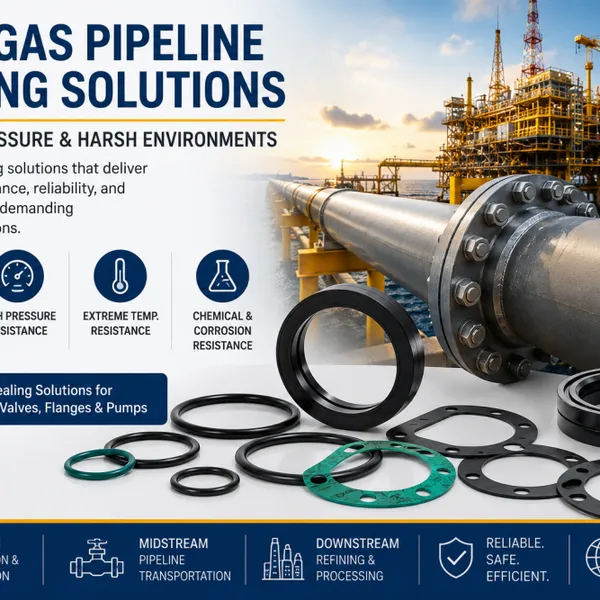
 Oil & Gas Pipeline Gaskets | High Pressure Sealing SystemsNegotiableMOQ: 10 Pieces
 -
Air Compressor High-Temperature Seals | Vibration Resistant DesignNegotiableMOQ: 10 Pieces
-
FFKM Chemical Processing Seals | Ultra Corrosive EnvironmentsNegotiableMOQ: 10 Pieces
-
High-Temperature Industrial O-Rings | Mechanical Equipment SealingNegotiableMOQ: 10 Pieces
-
Heavy Duty Hydraulic Gaskets | Mining & Construction EquipmentNegotiableMOQ: 10 Pieces
-
FFKM Valve O-Rings | High-Temperature Petrochemical ApplicationsNegotiableMOQ: 10 Pieces
-
Chemical Resistant Industrial Gaskets | Acid Alkali Processing EquipmentNegotiableMOQ: 10 Pieces
-
High-Pressure Compressor Sealing Gaskets | Gas Compression SystemsNegotiableMOQ: 10 Pieces
-
FKM High-Temperature O-Rings | Industrial Fluid Sealing SystemsNegotiableMOQ: 10 Pieces
-
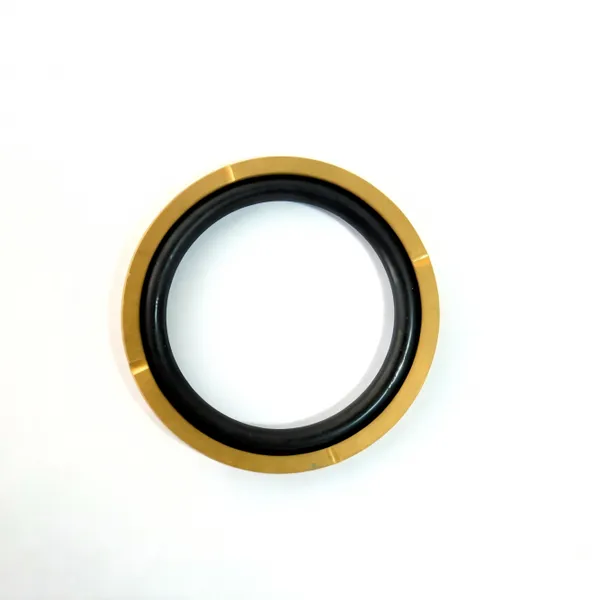
Oil Drilling High-Temperature Sealing Rings | Extreme Downhole ConditionsNegotiableMOQ: 10 Pieces
-
Chemical Reactor Gaskets | High-Temperature Corrosion ResistanceNegotiableMOQ: 10 Pieces
-
Industrial Air Compressor Gaskets | High Vibration SystemsNegotiableMOQ: 10 Pieces
-
FFKM Chemical Resistant O-Rings | Aggressive Media SealingNegotiableMOQ: 10 Pieces
-
High-Pressure Hydraulic Sealing Rings | Heavy Industrial EquipmentNegotiableMOQ: 10 Pieces
-
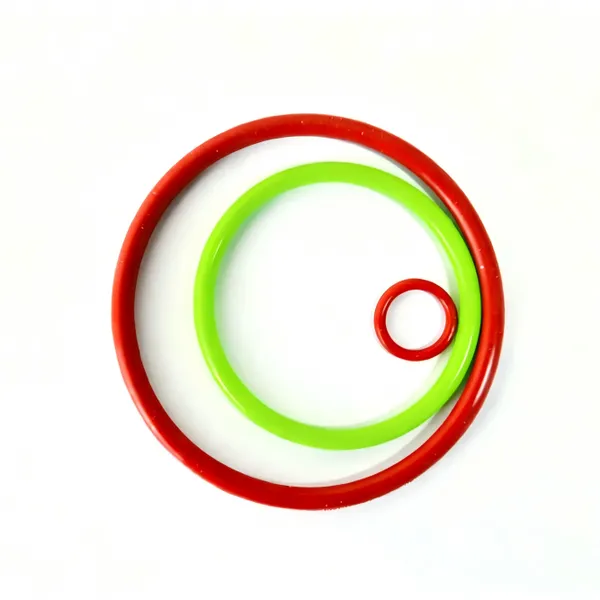
Specialty Rubber O-Rings | High-Pressure Oil & Gas ApplicationsNegotiableMOQ: 10 Pieces


-
High-Temperature Rubber Seals | Steam & Hot Fluid SystemsNegotiableMOQ: 10 Pieces
-
FKM Sealing Rings | Corrosive Chemical HandlingNegotiableMOQ: 10 Pieces
-
Wear-Resistant Rubber Gaskets | High-Pressure Hydraulic SystemsNegotiableMOQ: 10 Pieces
-
High-Temperature FFKM O-Rings | Chemical Reactor SealingNegotiableMOQ: 10 Pieces
-
Industrial Air Compressor Sealing Rings | High-Temperature Vibration SystemsNegotiableMOQ: 10 Pieces