 Business License

Oil & Gas Rubber Seals: Ultimate Engineering Guide & Material Selection
The Ultimate Engineering Guide to Rubber Seals in the Oil & Gas Industry
In the Oil & Gas sector, even a single component failure can result in catastrophic downtime, multi-million-dollar losses, or severe environmental hazards. Among the most critical yet often overlooked components are elastomeric rubber seals. From drilling rigs in the North Sea to high-pressure valves in the Permian Basin, these seals are the unsung heroes that keep fluids contained and operations running smoothly.
This guide provides a comprehensive look at material selection, environmental challenges, and industry standards to help engineers choose the right rubber seal for extreme oilfield applications.
1. The Extreme Operating Environment
Oil and gas applications push elastomeric materials to their physical and chemical limits. Engineers must design for the "Triple Threat":
· Extreme Temperatures: Cryogenic LNG applications require flexibility at -196°C, while downhole tools often face temperatures exceeding 200°C.
· Ultra-High Pressure: Seals must withstand pressures exceeding 15,000 psi (1034 bar) without structural failure.
· Aggressive Chemistry: Continuous exposure to sour gas (H₂S), CO₂, methane, corrosion inhibitors, and drilling muds can degrade substandard materials quickly.
2. Top Elastomer Materials for Oil & Gas Applications
There is no one-size-fits-all compound; the correct polymer base determines a seal's lifespan and performance.
Elastomer Type | Common Name | Temperature Range | Key Strengths | Best Applications |
FKM | Fluoroelastomer | -20°C to 200°C | High chemical and heat resistance | Valves, pumps, fuel systems |
HNBR | Hydrogenated Nitrile | -40°C to 160°C | Exceptional mechanical strength and abrasion resistance | Downhole tools, packers, mud pumps |
FFKM | Perfluoroelastomer | -15°C to 325°C | Near-universal chemical resistance and thermal stability | Critical sour gas environments, subsea trees |
FEPM | Af | 0°C to 200°C | Resistant to steam, sour gas, strong amines/bases | Steam injection, enhanced oil recovery, deep hot wells |
3. Critical Failure Modes and Prevention
Rapid Gas Decompression (RGD) / Explosive Decompression (ED)
High-pressure gas trapped in the seal expands violently when system pressure drops suddenly, causing internal blistering, cracking, and seal failure.
Solution: Use RGD-resistant materials certified to NORSOK M-710 or ISO 23936-2 with high cross-link density to resist gas expansion.
Chemical Degradation (Sour Gas Attack)
Hydrogen Sulfide (H₂S) can attack standard elastomers, leading to embrittlement, cracking, or loss of elasticity.
Solution: Avoid standard NBR or low-fluorine FKM. Upgrade to high-fluorine FKM, FEPM (Aflas), or FFKM for high-H₂S environments.
4. Industry Standards and Certifications
In critical oilfield sealing applications, commercial-grade rubber is not sufficient. Engineers must ensure compliance with:
· NORSOK M-710: Tests aging and RGD resistance for North Sea operations.
· ISO 23936-2: Evaluates thermoplastic and elastomer longevity in oil and gas conditions.
· API 6A / 16A: Governs wellhead, Christmas tree, and drill-through equipment seals.
Conclusion: Don’t Let a $5 Seal Halt a $50M Operation
Seal failures are rarely accidental—they result from improper material selection. Understanding the intersection of temperature, pressure, chemical exposure, and mechanical stress allows engineers to dramatically extend equipment MTBF (Mean Time Between Failures).
Partner with Oil & Gas Sealing Experts
Whether designing a downhole tool, subsea valve, or pipeline system, a robust sealing strategy is critical. Our team specializes in custom-compounded, high-performance elastomers certified to NORSOK and ISO standards.
�� [Contact Our Engineering Team Today] for a free material compatibility review or custom O-ring prototypes for your next project.
Recently Posted
-
New Open Mill Arrived | SEAL CHRIS Production Upgrade
August 4, 2026Great news from SEAL CHRIS! Our brand-new rubber open mill has officially landed at our factory.As a core equipment for rubber mix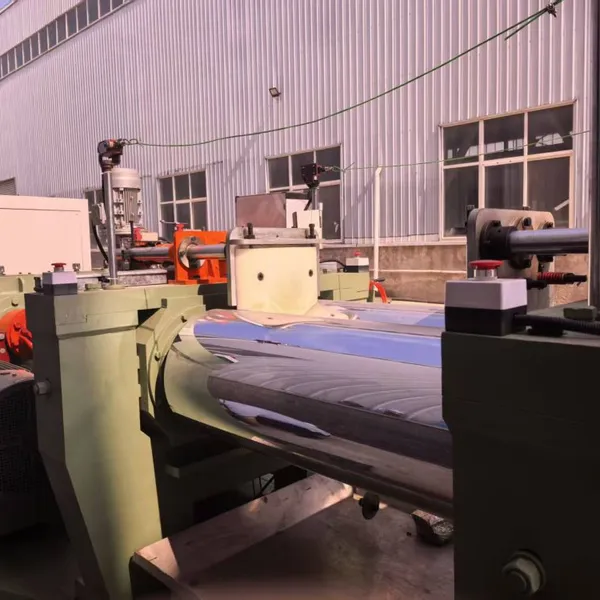 Read More
 -
High-Temperature FFKM Sealing Rings | Oil & Gas Extreme Environment Applications
July 21, 2026High-Temperature FFKM Sealing Rings for Oil & Gas ApplicationsProduct OverviewFFKM sealing rings are engineered for extreme op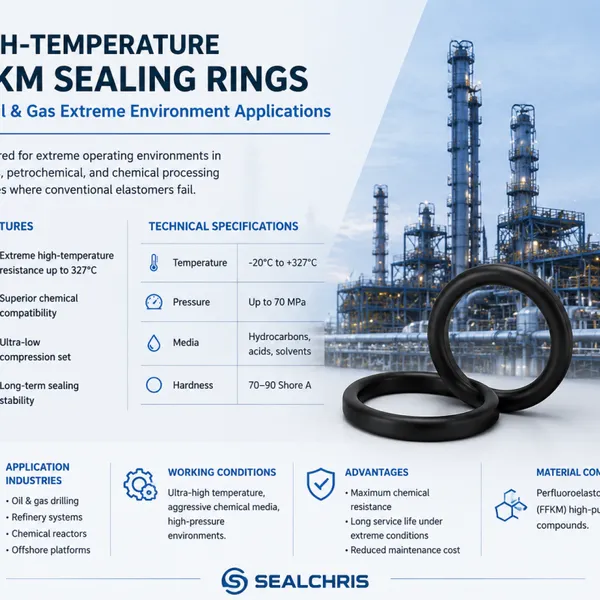 Read More
 -
Automotive Rubber Seal Applications: Engine, Fuel System & Vehicle Sealing Solutions
July 14, 2026Automotive Rubber Seal Applications: Engine, Fuel System & Vehicle Sealing SolutionsAutomotive rubber seals are essential comp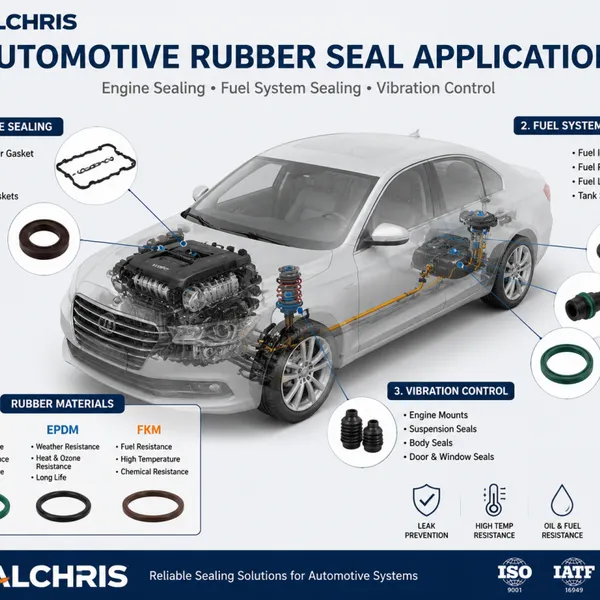 Read More
 -
Hydraulic Cylinder Seals | Piston and Rod Seal Guide
July 7, 2026Hydraulic Cylinder Seals | Piston and Rod Seal GuideIntroductionHydraulic cylinders are widely used in construction machinery, ind Read More

Contact Us
Recommended Products
-
 Oil & Gas Pipeline Gaskets | High Pressure Sealing SystemsNegotiableMOQ: 10 Pieces
 -
Air Compressor High-Temperature Seals | Vibration Resistant DesignNegotiableMOQ: 10 Pieces
-
FFKM Chemical Processing Seals | Ultra Corrosive EnvironmentsNegotiableMOQ: 10 Pieces
-
High-Temperature Industrial O-Rings | Mechanical Equipment SealingNegotiableMOQ: 10 Pieces
-
Heavy Duty Hydraulic Gaskets | Mining & Construction EquipmentNegotiableMOQ: 10 Pieces
-
FFKM Valve O-Rings | High-Temperature Petrochemical ApplicationsNegotiableMOQ: 10 Pieces
-
Chemical Resistant Industrial Gaskets | Acid Alkali Processing EquipmentNegotiableMOQ: 10 Pieces
-
High-Pressure Compressor Sealing Gaskets | Gas Compression SystemsNegotiableMOQ: 10 Pieces
-
FKM High-Temperature O-Rings | Industrial Fluid Sealing SystemsNegotiableMOQ: 10 Pieces
-
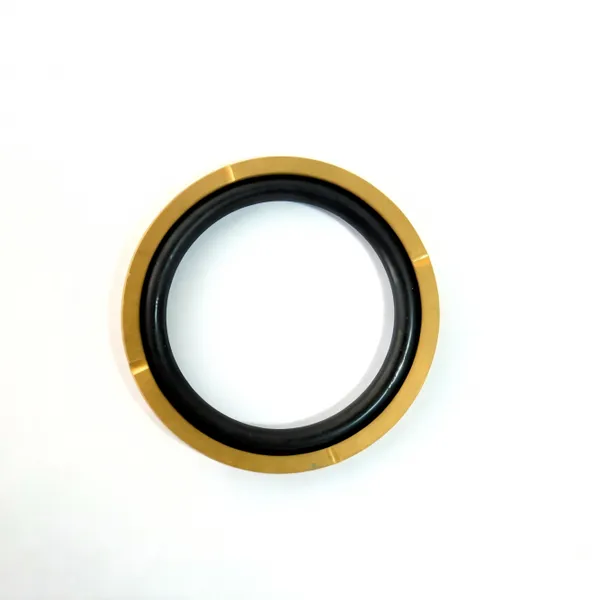
Oil Drilling High-Temperature Sealing Rings | Extreme Downhole ConditionsNegotiableMOQ: 10 Pieces
-
Chemical Reactor Gaskets | High-Temperature Corrosion ResistanceNegotiableMOQ: 10 Pieces
-
Industrial Air Compressor Gaskets | High Vibration SystemsNegotiableMOQ: 10 Pieces
-
FFKM Chemical Resistant O-Rings | Aggressive Media SealingNegotiableMOQ: 10 Pieces
-
High-Pressure Hydraulic Sealing Rings | Heavy Industrial EquipmentNegotiableMOQ: 10 Pieces
-
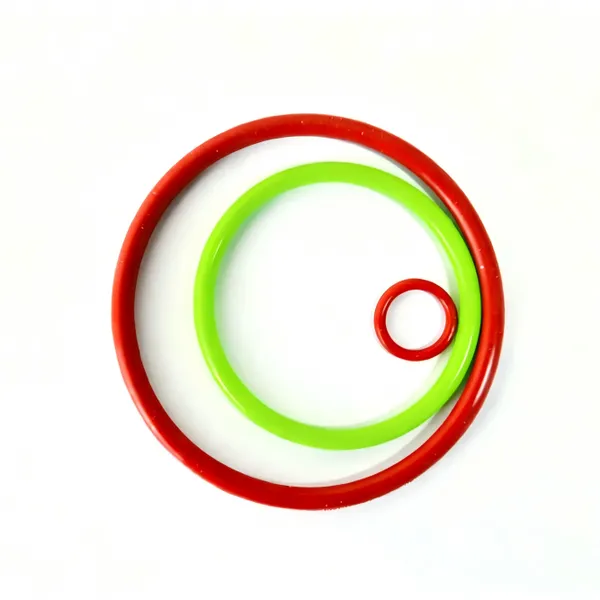
Specialty Rubber O-Rings | High-Pressure Oil & Gas ApplicationsNegotiableMOQ: 10 Pieces


-
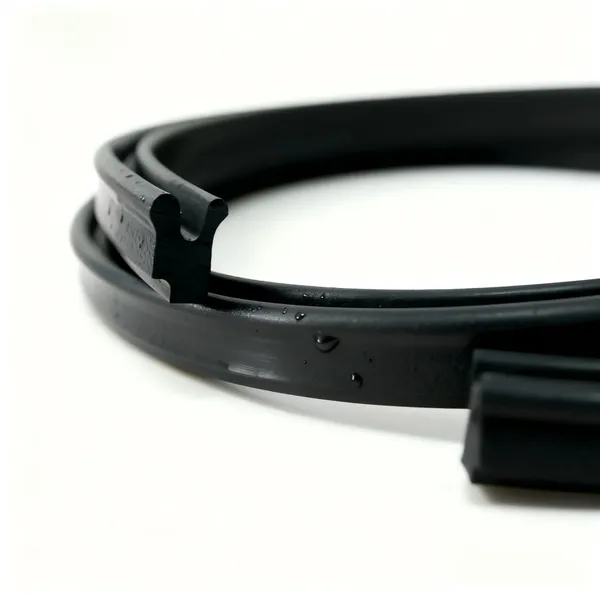
High-Temperature Rubber Seals | Steam & Hot Fluid SystemsNegotiableMOQ: 10 Pieces
-
FKM Sealing Rings | Corrosive Chemical HandlingNegotiableMOQ: 10 Pieces
-
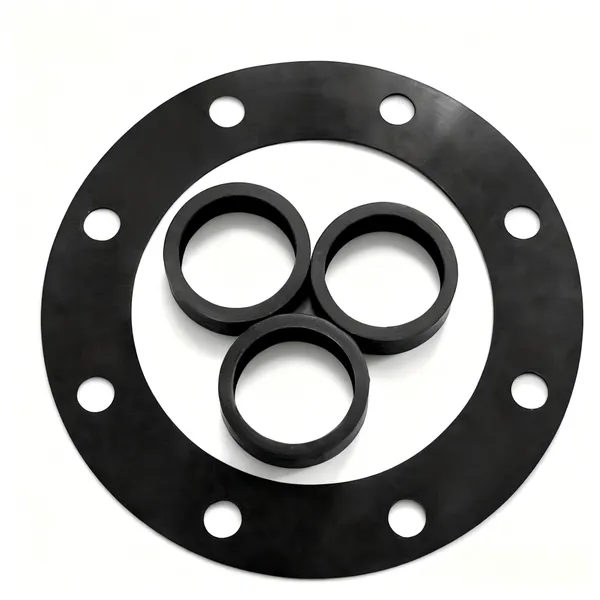
Wear-Resistant Rubber Gaskets | High-Pressure Hydraulic SystemsNegotiableMOQ: 10 Pieces
-
High-Temperature FFKM O-Rings | Chemical Reactor SealingNegotiableMOQ: 10 Pieces
-
Industrial Air Compressor Sealing Rings | High-Temperature Vibration SystemsNegotiableMOQ: 10 Pieces