 Business License

FFKM vs FKM Seals | Extreme Chemical Resistance Comparison
FFKM vs FKM Seals | Extreme Chemical Resistance Comparison
Introduction
FFKM and FKM are two of the most important fluorinated elastomer materials used in industrial sealing systems. They are widely applied in chemical processing, oil & gas, semiconductor, and high-temperature environments.
Although both materials belong to the fluoropolymer elastomer family, their performance levels are significantly different. FKM is considered the industrial standard, while FFKM represents the highest-performance sealing material available today.
Understanding their differences helps engineers select the right sealing solution for chemical resistance, durability, and system safety.
1. What is FKM? (Industrial Standard Elastomer)
FKM (Fluoroelastomer) is widely used in industrial sealing applications due to its balanced performance and cost efficiency.
Key characteristics of FKM:
· Good resistance to oils, fuels, and hydrocarbons
· Moderate chemical resistance
· Stable performance at medium to high temperatures (up to ~200–250°C depending on grade)
· Widely available and cost-effective
Typical applications:
· Oil & gas pipelines
· Hydraulic systems
· Automotive engines
· General industrial equipment
FKM is the default choice for most industrial sealing systems where extreme chemical exposure is not present.
2. What is FFKM? (Ultra-High Performance Elastomer)
FFKM (Perfluoroelastomer) is the highest performance elastomer available in the sealing industry.
It provides near-universal chemical resistance and is designed for extreme operating conditions where other materials fail.
Key characteristics of FFKM:
· Near universal chemical resistance (acids, solvents, aggressive media)
· Excellent high-temperature stability (often up to 300°C+)
· Superior sealing reliability in extreme environments
· Extremely low contamination risk
Typical applications:
· Chemical reactors
· Semiconductor manufacturing systems
· Pharmaceutical processing equipment
· High-end oil refinery units
· Aggressive chemical environments
FFKM is used only when standard elastomers cannot survive the operating conditions.
3. FFKM vs FKM Performance Comparison
Property | FKM | FFKM |
Chemical Resistance | Good | Near universal |
Temperature Resistance | High | Very high |
Cost | Medium | Very high |
Durability | Good | Excellent |
Application Range | Industrial standard | Extreme environments |
4. Application Selection Guide
Choose FKM when:
· Working in oil, fuel, or hydrocarbon environments
· Moderate chemical exposure
· Cost efficiency is important
· Standard industrial sealing systems
Choose FFKM when:
· Strong acids or aggressive chemicals are present
· Semiconductor or ultra-clean environments are required
· System failure is not acceptable
· High-temperature + high-chemical conditions exist
5. Industrial Engineering Considerations
Material selection should always consider:
· Chemical compatibility
· Operating temperature range
· Pressure conditions
· Service life expectations
· Maintenance cost vs system criticality
In most industrial systems, FKM provides the best balance of performance and cost. However, in critical chemical or semiconductor systems, FFKM is the only reliable solution.
Conclusion
FFKM and FKM serve different roles in modern industrial sealing technology. FKM remains the most widely used industrial elastomer due to its cost-effectiveness and balanced performance. FFKM, however, is the ultimate solution for extreme chemical resistance and high-performance applications.
For engineers and procurement teams, selecting the correct material directly impacts system safety, reliability, and long-term operational cost.
Recently Posted
-
New Open Mill Arrived | SEAL CHRIS Production Upgrade
August 4, 2026Great news from SEAL CHRIS! Our brand-new rubber open mill has officially landed at our factory.As a core equipment for rubber mix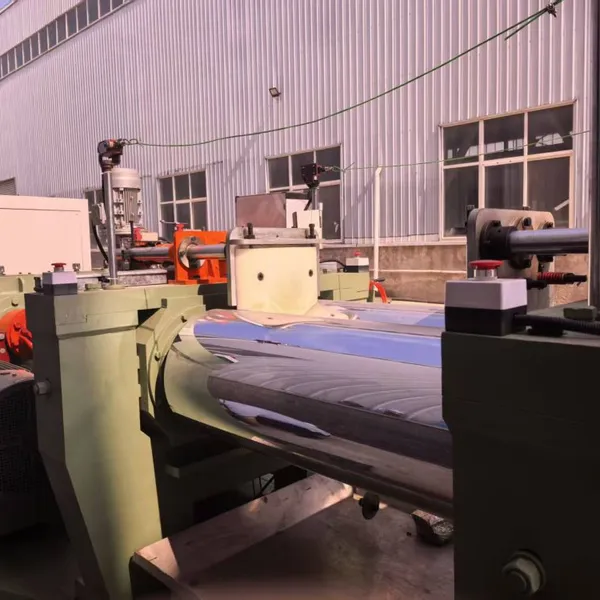 Read More
 -
High-Temperature FFKM Sealing Rings | Oil & Gas Extreme Environment Applications
July 21, 2026High-Temperature FFKM Sealing Rings for Oil & Gas ApplicationsProduct OverviewFFKM sealing rings are engineered for extreme op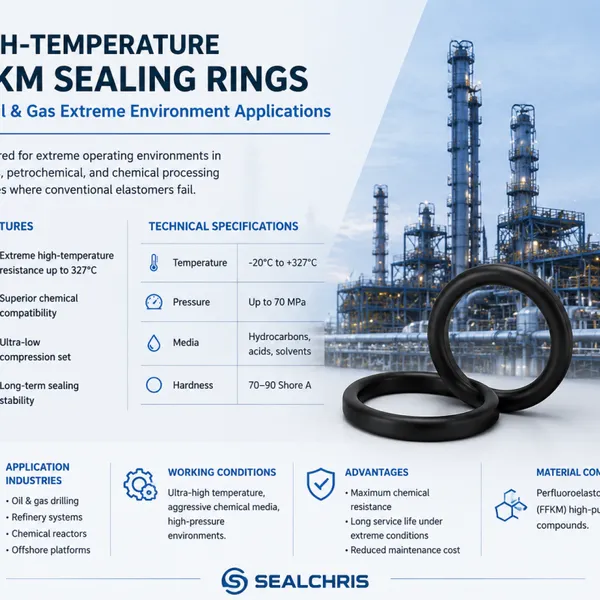 Read More
 -
Automotive Rubber Seal Applications: Engine, Fuel System & Vehicle Sealing Solutions
July 14, 2026Automotive Rubber Seal Applications: Engine, Fuel System & Vehicle Sealing SolutionsAutomotive rubber seals are essential comp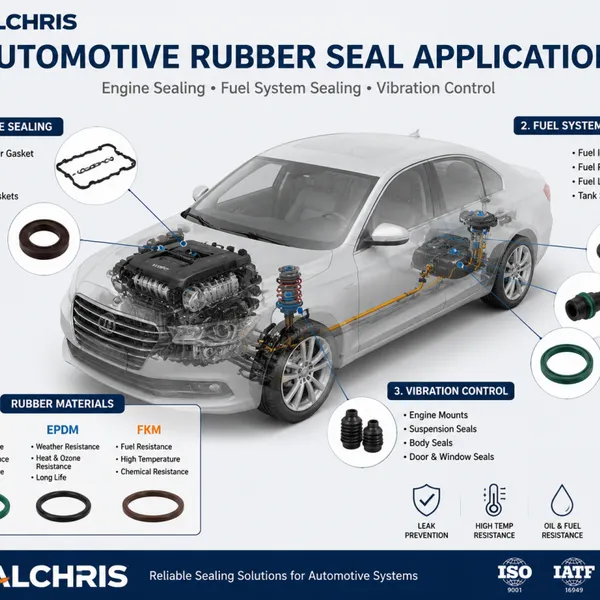 Read More
 -
Hydraulic Cylinder Seals | Piston and Rod Seal Guide
July 7, 2026Hydraulic Cylinder Seals | Piston and Rod Seal GuideIntroductionHydraulic cylinders are widely used in construction machinery, ind Read More

Contact Us
Recommended Products
-
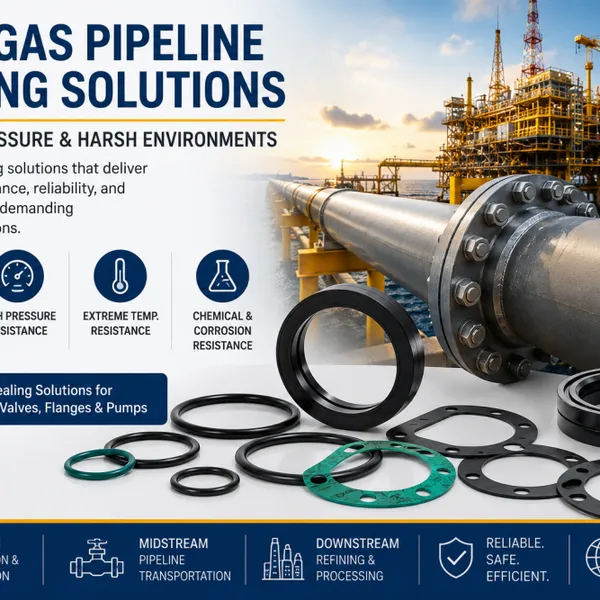
 Oil & Gas Pipeline Gaskets | High Pressure Sealing SystemsNegotiableMOQ: 10 Pieces
 -
Air Compressor High-Temperature Seals | Vibration Resistant DesignNegotiableMOQ: 10 Pieces
-
FFKM Chemical Processing Seals | Ultra Corrosive EnvironmentsNegotiableMOQ: 10 Pieces
-
High-Temperature Industrial O-Rings | Mechanical Equipment SealingNegotiableMOQ: 10 Pieces
-
Heavy Duty Hydraulic Gaskets | Mining & Construction EquipmentNegotiableMOQ: 10 Pieces
-
FFKM Valve O-Rings | High-Temperature Petrochemical ApplicationsNegotiableMOQ: 10 Pieces
-
Chemical Resistant Industrial Gaskets | Acid Alkali Processing EquipmentNegotiableMOQ: 10 Pieces
-
High-Pressure Compressor Sealing Gaskets | Gas Compression SystemsNegotiableMOQ: 10 Pieces
-
FKM High-Temperature O-Rings | Industrial Fluid Sealing SystemsNegotiableMOQ: 10 Pieces
-
Oil Drilling High-Temperature Sealing Rings | Extreme Downhole ConditionsNegotiableMOQ: 10 Pieces
-
Chemical Reactor Gaskets | High-Temperature Corrosion ResistanceNegotiableMOQ: 10 Pieces
-
Industrial Air Compressor Gaskets | High Vibration SystemsNegotiableMOQ: 10 Pieces
-
FFKM Chemical Resistant O-Rings | Aggressive Media SealingNegotiableMOQ: 10 Pieces
-
High-Pressure Hydraulic Sealing Rings | Heavy Industrial EquipmentNegotiableMOQ: 10 Pieces
-
Specialty Rubber O-Rings | High-Pressure Oil & Gas ApplicationsNegotiableMOQ: 10 Pieces


-
High-Temperature Rubber Seals | Steam & Hot Fluid SystemsNegotiableMOQ: 10 Pieces
-
FKM Sealing Rings | Corrosive Chemical HandlingNegotiableMOQ: 10 Pieces
-
Wear-Resistant Rubber Gaskets | High-Pressure Hydraulic SystemsNegotiableMOQ: 10 Pieces
-
High-Temperature FFKM O-Rings | Chemical Reactor SealingNegotiableMOQ: 10 Pieces
-
Industrial Air Compressor Sealing Rings | High-Temperature Vibration SystemsNegotiableMOQ: 10 Pieces